Atta & Flour
Why chakki atta tastes different from regular flour
Many families say rotis made with chakki atta simply taste more like home. The difference starts with how the wheat is ground.
Chakki grinding and roller milling
A chakki grinds whole wheat between two rotating stones. The whole grain — bran, germ and the inner endosperm — is ground together into one flour.
Roller mills pass wheat through a series of steel rollers and sieves. The parts of the grain are often separated and blended back in set ratios. The result is a very uniform, fine flour.
What you notice in the kitchen
- Texture: chakki atta has a slightly grainy feel between the fingers. Roller-milled flour feels smoother and silkier.
- Water absorption: chakki atta generally takes more water while kneading. Add water gradually until the dough is smooth.
- Taste: the bran and germ ground together give a fuller wheat flavour that many people associate with rotis made at home.
- Colour: chakki atta is usually a little darker, with visible bran flecks.
Getting the best from chakki atta
- Knead a slightly softer dough than you would with fine flour.
- Rest the dough for 15–20 minutes before rolling.
- Store it in an airtight container and use it within a few weeks of opening, because whole-grain flour keeps its fresh smell best when it is used regularly.
Where it fits
Chakki atta is the everyday choice for roti, paratha and puri. For bhature, naan or baking, maida is the usual flour instead.
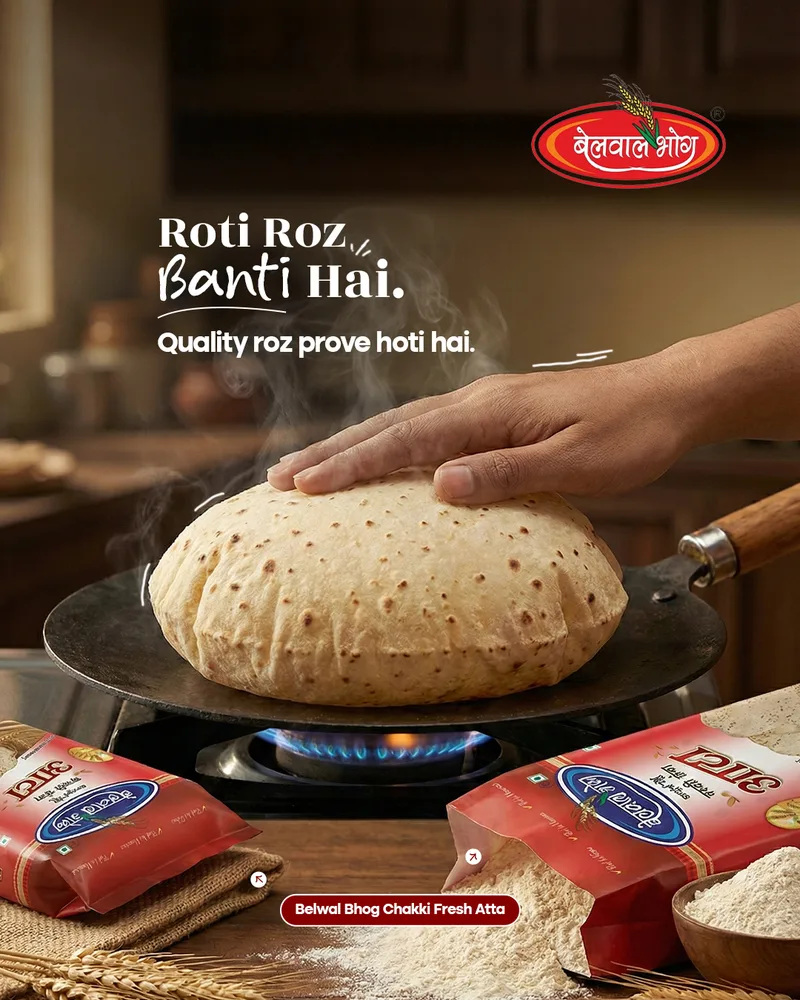
Belwal Bhog's Fresh Chakki Atta is made in Haldwani for everyday rotis, and is available in household and trade pack sizes.