Atta & Flour
How to choose atta for soft rotis at home
Soft rotis come from two things working together: the flour you buy and the way you handle the dough. Changing only one of them rarely fixes the problem.
What to look at when you buy atta
- The grind. Chakki-ground atta has a slightly coarser feel than very fine flour. It absorbs water well and gives rotis that stay soft after cooling.
- The colour. Whole wheat atta is a light creamy brown with tiny bran flecks. A very white atta usually has less bran.
- The smell. Fresh atta smells mildly of wheat. A stale or musty smell means it has been stored too long or in damp conditions.
- The pack size. Buy a size your family finishes in four to six weeks. A 5kg or 10kg pack of wheat flour suits most homes; larger families and dhabas can use the 20kg and 50kg sacks.
How the dough should feel
Good atta takes in water steadily and turns into a smooth dough that does not crack at the edges when pressed. If the dough tears easily, add water a spoon at a time instead of adding more flour.
Kneading and resting
- Add lukewarm water gradually and knead for 5–7 minutes.
- Cover the dough and rest it for 15–20 minutes. Resting lets the flour absorb the water evenly, which is the single biggest step towards softness.
- Roll evenly — a roti that is thick in the middle and thin at the edges cooks unevenly.
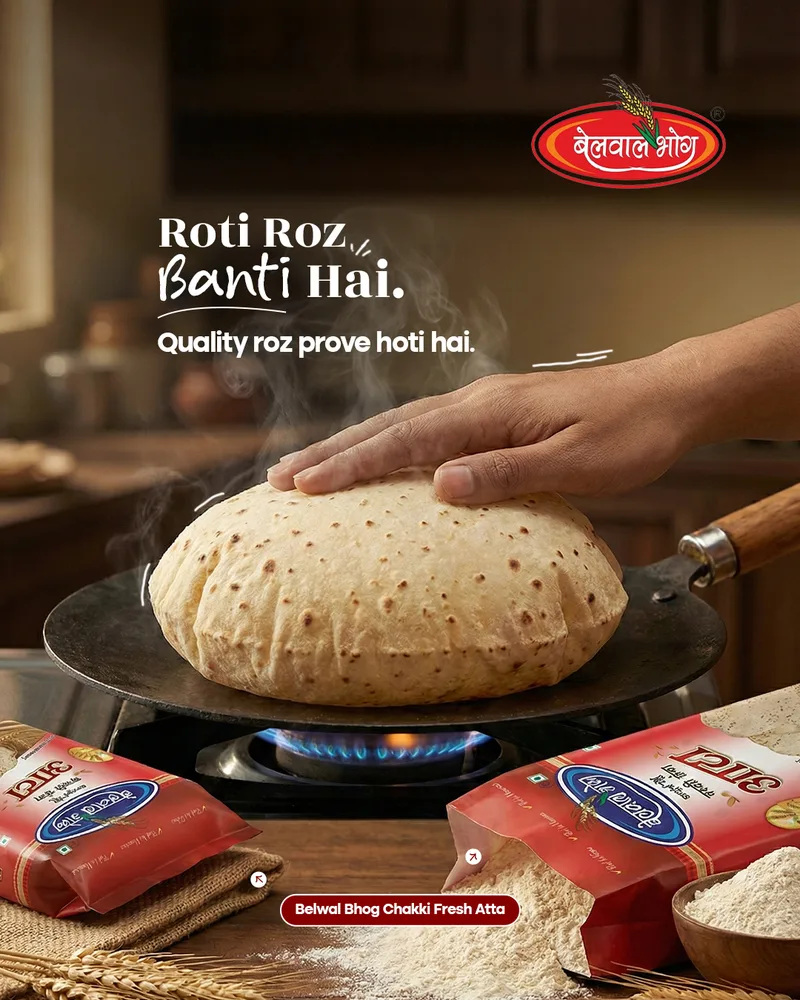
- Cook on a hot tawa, flip once, and finish on the flame or press gently with a cloth so it puffs.
Storing atta at home
Keep atta in an airtight container in a cool, dry place and always use a dry scoop. Moisture is what spoils flour fastest. In the monsoon, smaller packs are a safer choice.
Which Belwal Bhog atta to choose
For everyday rotis, Fresh Chakki Atta is the core choice. For variety, families in Uttarakhand also mix in Madua flour or make makki ki roti in winter.